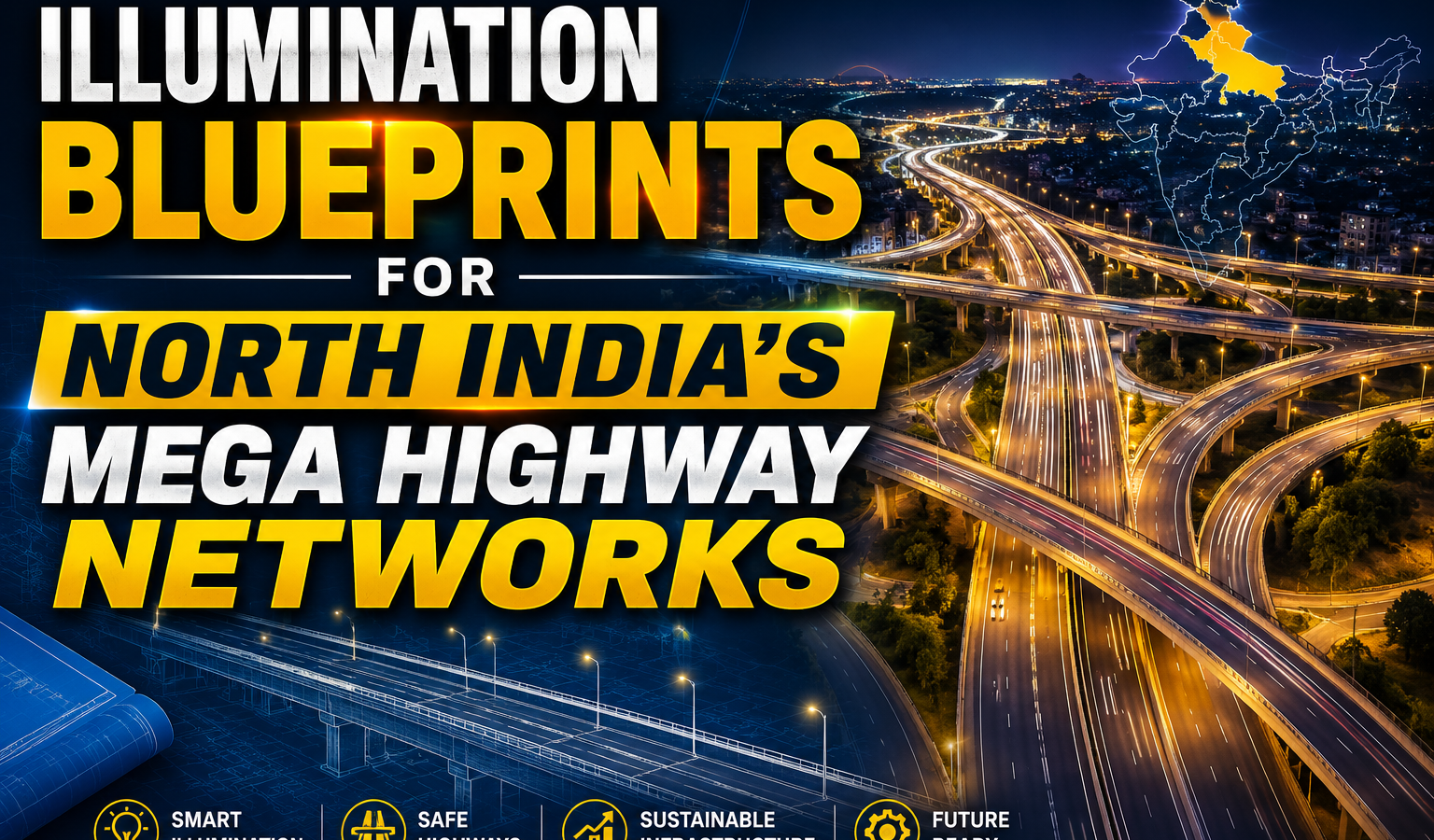
India’s northern expressway network is expanding faster than at any point in the last two decades, and with that expansion comes a hard engineering question that project managers rarely get to sidestep: how do you light hundreds of kilometres of carriageway safely, uniformly, NHAI Highway Lighting Contractors Delhi, and in a way that survives everything from Punjab’s dust storms to Uttarakhand’s hill fog? For contractors bidding on stretches that touch Delhi NCR, Punjab, Uttar Pradesh, Rajasthan, and Uttarakhand, high mast lighting has become the default answer — but only when it’s specified and installed correctly.
Why Highway Lighting Is a Different Engineering Problem Than Industrial Lighting
A factory floodlight only has to serve a fixed, predictable audience. A highway high mast pole has to serve drivers moving at 80–120 km/h, in variable visibility, often for years without a maintenance shutdown window. That changes almost every design decision — pole height, luminaire spacing, glare control, and above all, the steel and foundation specification.
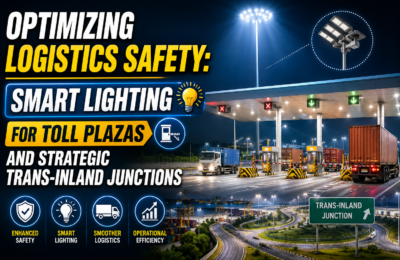
For NHAI Highway Lighting Contractors Delhi projects, the constraint is usually density: NCR stretches carry heavier traffic volumes and more complex interchange geometry, so lighting has to account for merging lanes, service roads, and pedestrian crossings simultaneously. A single high mast tower at a cloverleaf interchange may need to illuminate three or four traffic streams without creating shadow zones at the merge points.
Move west into Punjab and the calculus changes again. National Highway Lighting Erection Punjab and National Highway Lighting Ludhiana contracts routinely specify poles that must tolerate seasonal dust storms and stubble-burning haze, both of which reduce effective visibility and put extra load on luminaire cleaning and maintenance schedules. Contractors here increasingly favour sealed IP66-rated LED fixtures precisely because they resist particulate ingress far better than older HPSV lamp housings.
Wind Load Calculation: The Foundation of Every Design
Every high mast installation on a national highway starts with a wind load calculation, and this is where plain terrain and mountainous terrain diverge sharply.
On flat expressway stretches — the kind you find feeding into Highway High Mast Pole Suppliers Lucknow and Highway High Mast Pole Suppliers Jaipur projects — wind loading is relatively predictable. Poles are typically engineered to IS 875 basic wind speed data for the region, with galvanized steel sections rated to withstand sustained gusts without vibration fatigue at the base plate.
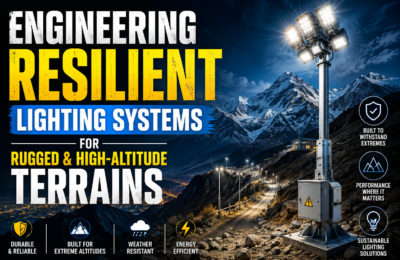
In hill terrain, the picture is more complex. Mountain Highway High Mast Lighting Dehradun projects have to account for channelled wind effects through valleys, which can produce localized gust speeds well above the regional average. This is why hill-route lighting contractors generally over-specify base plate anchoring and use shorter, more closely spaced poles rather than tall masts at wide intervals — it reduces the moment arm and keeps the structure within safe deflection limits even during monsoon storm cells.
Explore how HighMast India engineers wind-rated structures for varied terrain on our Products page, where pole specifications are broken down by height, wind class, and application.
Sourcing the Right Steel: Hot-Dip Galvanization for Northern Weather Cycles
North India’s weather swings from near-freezing winter nights in Punjab and Uttarakhand to intense summer heat in the Delhi–Jaipur corridor, and that thermal cycling is hard on unprotected steel. Hot-dip galvanization — where the pole is fully immersed in molten zinc rather than just coated — is now close to a non-negotiable specification for any highway contract expected to run a 15–25 year service life.
The key thing procurement teams should verify is coating thickness, measured in microns, not just the presence of galvanization. A pole galvanized to a thin, inconsistent coat will show rust bleed at weld points within a few winters, particularly in Punjab’s higher-humidity agricultural belts. Reputable suppliers will provide a mill test certificate showing coating thickness per IS 4759 standards.
Compliance Checklists for NHAI and State PWD Regulations
Winning and executing a highway lighting tender isn’t just about the hardware — it’s about documentation discipline. Contractors working across Delhi, Punjab, UP, and Rajasthan typically need to satisfy:
- IS 2713 structural compliance for the pole itself, including tested wind ratings for the specific region
- NHAI’s photometric requirements for average lux, uniformity ratio, and glare index at carriageway level
- State PWD electrical safety certifications for the control panel, earthing, and lightning protection systems
- Type-test reports for the luminaire, confirming IP rating and thermal performance under continuous operation
Missing any one of these at the tender documentation stage is one of the most common reasons bids get disqualified before technical evaluation even begins. Teams that pre-assemble a compliance folder — rather than scrambling for it after award — consistently move faster through NHAI approval cycles.
Designing for Long-Term Maintenance, Not Just Installation Day
A highway high mast pole that looks perfect on commissioning day but requires a full lane closure every time a lamp needs replacing is a poor long-term investment. This is why experienced highway contractors specify motorized lowering ring mechanisms rather than fixed-head poles wherever budget allows — it lets maintenance crews service the luminaire array at ground level, off the live carriageway, which is both safer for workers and far less disruptive to traffic flow.
For agencies managing stretches across multiple states — Delhi to Ludhiana, or Jaipur to Lucknow — standardizing on a single lowering mechanism specification across the whole corridor also simplifies spares inventory and crew training, which matters enormously once you’re maintaining dozens of poles rather than a handful.
Bringing It Together: A Regional Approach to National Standards
The common thread across NHAI Highway Lighting Contractors Delhi, National Highway Lighting Erection Punjab, and Mountain Highway High Mast Lighting Dehradun work is that the underlying IS standards are national, but the engineering judgment applied to them has to be regional. A pole spec that performs flawlessly on the flat Jaipur–Lucknow corridor may be undersized for a Dehradun hill approach road, and a lowering mechanism chosen for Punjab’s dust conditions may need additional sealing for Uttarakhand’s moisture.
Contractors and government procurement teams evaluating vendors for North Indian highway lighting projects should look for a supplier who can demonstrate region-specific wind load calculations, verified galvanization thickness, and a track record of NHAI and PWD compliance documentation — not just a generic pole catalogue. To discuss compliance requirements for a specific stretch or tender, review HighMast India’s compliance and certification details on the About & Compliance page, or request a technical consultation for your project corridor.
Budgeting Realistically: Where Highway Lighting Costs Actually Go
Procurement teams new to highway lighting tenders often assume the pole itself represents the bulk of project cost. In practice, for a well-specified NHAI Highway Lighting Contractors Delhi or Highway High Mast Pole Suppliers Jaipur stretch, the pole and luminaire together typically account for less than half of total installed cost. Foundation excavation and civil work, cabling and trenching along the carriageway, control panel and switching infrastructure, and traffic management during installation all add up quickly — and are frequently underestimate at the tender-preparation stage. Contractors who build detailed line-item estimates for each of these components, rather than a single lump-sum “per pole” figure, tend to submit more accurate and more defensible bids.
Common Mistakes That Delay Highway Lighting Handover
Even technically sound designs can run into avoidable delays during execution. The most frequent culprits on North Indian highway projects include: underestimating cable trenching time through rocky or waterlog sections common along the Punjab and UP corridors; ordering poles before final photometric approval is signed off by NHAI, resulting in costly respecification; and failing to coordinate high mast erection schedules with parallel paving or median construction work, which can block crane access to foundation points for weeks at a time. Building buffer time into the project schedule specifically around these three risk areas has proven, across multiple highway contracts, to be the difference between an on-time handover and a stalled one.
Frequently Asked Questions
How long does a typical highway high mast installation take from foundation to commissioning? For a standard flat-terrain pole, foundation curing, erection, and electrical commissioning typically take two to three weeks per site, assuming no civil work delays. Hill terrain sites in the Dehradun corridor generally take longer due to access constraints.
Do NHAI projects require third-party photometric verification before final payment release? Most NHAI contracts do require an independent lux-level survey confirming the install system meets specifie uniformity and average lux targets before final handover payments are released, so this should be scheduled into the project timeline early rather than treated as a final-week formality.