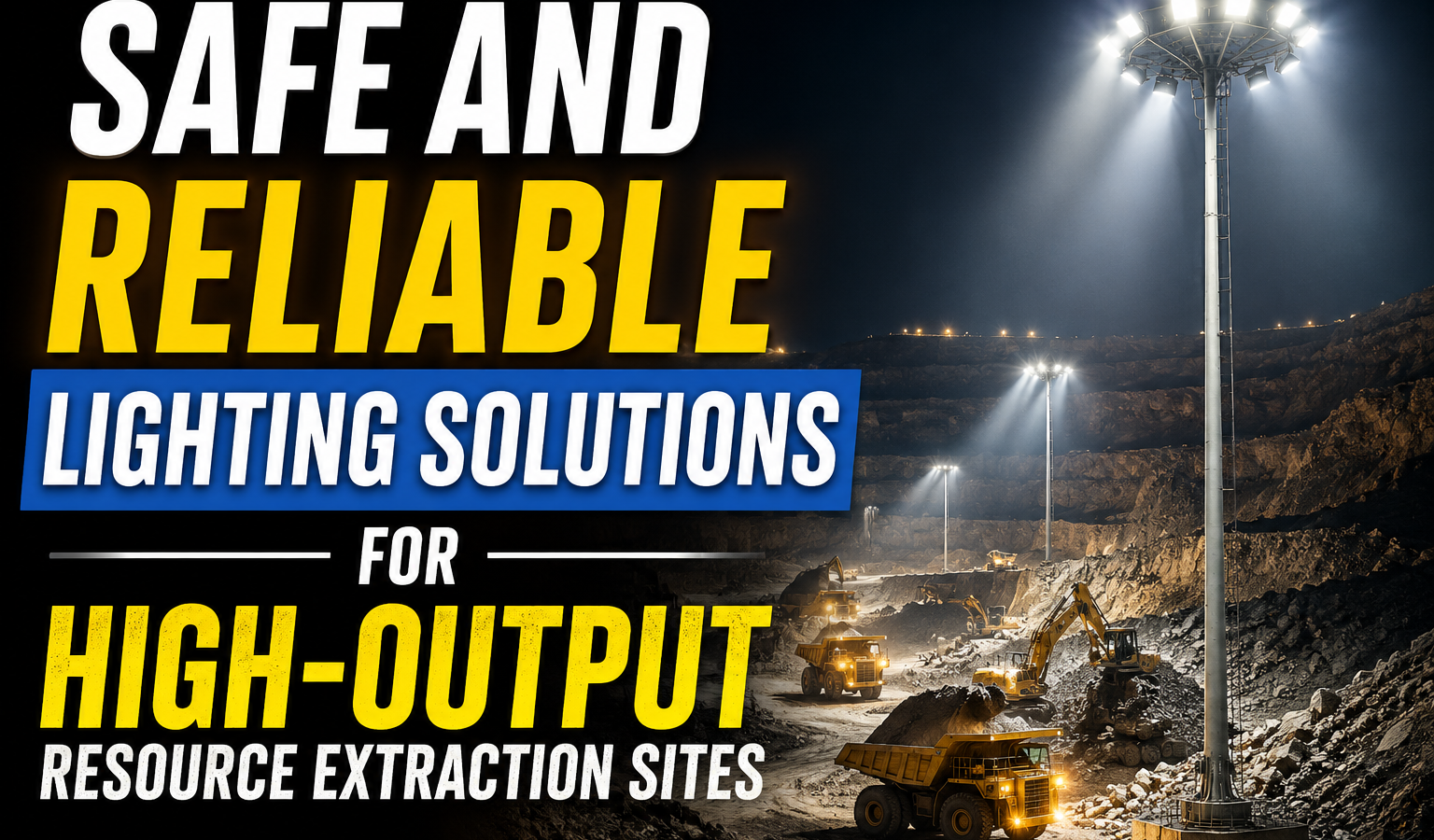
Resource extraction and heavy processing sites across Chhattisgarh, Odisha, and Jharkhand run some of the most demanding lighting environments in the entire industrial sector — continuous dust exposure, heavy vibration from processing equipment, round-the-clock shift operations, Coal Mine Perimeter Lighting Chhattisgarh, and safety stakes that are considerably higher than a typical manufacturing plant. For safety compliance directors and procurement leads evaluating lighting infrastructure at these sites, the specification conversation starts from a different baseline than almost any other industrial application covered in this series.
Choosing High-Durability, Dust-Resistant Lighting for Mining Applications
Coal and mineral extraction sites generate a level of airborne particulate matter that few other industrial environments approach. Coal Mine Perimeter Lighting Chhattisgarh installations have to account for continuous fine dust exposure that can degrade standard luminaire lenses and clog ventilation paths in fixture housings within a fraction of the time a comparable installation would last in a cleaner environment. IP66-rated sealed enclosures are close to a baseline requirement here, but procurement teams should also confirm actual lens material durability — some polymer lens materials show measurable abrasion and clouding under sustained fine-particulate exposure faster than higher-grade tempered glass alternatives, even when both carry the same nominal IP rating.
Structuring High-Power Floodlighting for Safe Night Shift Operations
Mining Site Perimeter Floodlighting Odisha projects covering active extraction and processing areas need floodlighting arrays calibrated specifically for the safety-critical visibility night shift workers depend on — clear sightlines around haul roads, loading points, and processing equipment where a shadow zone or glare source can directly contribute to a safety incident. This is meaningfully different from general area lighting design in that the photometric layout has to be validated against actual site safety audit findings and near-miss incident patterns, rather than designed purely from a generic industrial lighting template.
Engineering Vibration-Resistant Foundations Near Heavy Processing Machinery
Mining and steel processing sites subject nearby structures to sustained vibration from crushing, grinding, and heavy material handling equipment that operates continuously. Coalfield Perimeter Floodlighting Jharkhand installations positioned near active processing equipment need foundation and mounting hardware specifications that account for this vibration exposure explicitly — standard foundation designs adequate for a typical industrial yard can develop hairline cracking or bolt loosening over time under sustained vibration loads that a quieter site would never experience. Reinforced foundation designs and vibration-dampening mounting hardware, while adding some upfront cost, meaningfully extend structural service life at these sites.
Steel Plant Area Lighting: Bhilai and Jamshedpur
Bhilai Steel Plant Area Lighting Systems and TATA Steel Plant Area Lighting Jamshedpur work represents some of the largest single-site industrial lighting deployments in the country, given the sheer physical footprint of integrated steel plant operations. Lighting at this scale requires genuinely coordinated zone planning — blast furnace areas, rolling mill sections, raw material stockyards, and internal transport corridors each have distinct visibility and safety requirements, and a single uniform specification applied across the entire plant footprint would both over-light some zones unnecessarily and under-light others where more safety-critical visibility is actually needed.
Steel plants also present one of the more extreme heat-exposure environments for lighting infrastructure positioned near furnace or casting operations, where radiant heat from the process itself, not just ambient temperature, becomes a design consideration for fixture placement and thermal rating.
Preventative Maintenance in High-Vibration, High-Dust Environments
Given how much faster components can wear in mining and steel processing environments compared to a standard industrial site, preventative maintenance schedules for these facilities generally need to run on a considerably tighter inspection interval. Facilities that apply a standard industrial maintenance schedule — adequate for a clean, low-vibration site — to a mining or steel plant environment typically discover component failures well ahead of their nominal service life, simply because the environmental stress the equipment experiences is genuinely more severe than the standard schedule assumes.
Coordinating Lighting Upgrades With Continuous Production Schedules
Integrated steel plants and active mining operations rarely have the luxury of a full production shutdown to accommodate a lighting infrastructure upgrade, given the enormous cost of halting continuous furnace or extraction operations even briefly. Lighting contractors experienced in this sector plan upgrade work around scheduled maintenance shutdowns that the plant already has planned for other operational reasons, piggybacking lighting work onto these existing windows rather than requesting a dedicated shutdown solely for lighting infrastructure — a request most plant operations teams would be reluctant to grant given the production cost involved.
Power Reliability for Continuous Extraction and Processing Operations
Mining sites and integrated steel plants generally cannot tolerate lighting outages during active night shift operations, given the direct safety implications of losing visibility around haul roads, loading points, or furnace areas mid-shift. Bhilai Steel Plant Area Lighting Systems installations typically specify dual power feed architecture with automatic changeover, similar to the redundancy approaches discussed for airport and port infrastructure elsewhere in this series, given how directly a lighting failure at these sites can translate into an immediate safety incident rather than a mere inconvenience. Backup generator capacity sized specifically to cover the facility’s safety-critical lighting zones, rather than the full site lighting load, is a common cost-effective compromise for facilities where full-site backup power would be prohibitively expensive.
Insurance and Regulatory Reporting Considerations
Mining and steel plant operators typically carry industrial insurance policies that include specific provisions around lighting adequacy in safety-critical zones, particularly following any incident investigation where inadequate visibility is identified as a contributing factor. Facilities that maintain documented lighting compliance records — photometric surveys, maintenance logs, and structural inspection reports — are generally better positioned during both insurance claims processes and regulatory safety audits than those relying on informal assurances that lighting infrastructure is adequate. Given how frequently mining and steel sector safety audits specifically examine lighting adequacy around high-risk zones, treating this documentation as a standing operational record rather than an occasional compliance exercise pays dividends well beyond the immediate lighting project itself.
Selecting Contractors With Genuine Heavy-Industry Experience
Not every industrial lighting contractor has genuine experience with the specific combination of dust, vibration, and safety-criticality that mining and steel plant sites present. Procurement teams evaluating contractors for TATA Steel Plant Area Lighting Jamshedpur or comparable large integrated plant work should request references from genuinely comparable heavy-industry sites, rather than accepting general industrial lighting experience as sufficient qualification — the failure modes and maintenance realities at a steel plant are different enough from a standard warehouse or light manufacturing facility that experience in one doesn’t reliably transfer to the other.
What Safety Compliance Teams Should Specify for Resource Extraction Sites
Safety directors and procurement leads evaluating lighting for mining, coalfield, or steel plant sites should specify:
- Verified lens material durability under sustained fine-particulate exposure, not just a nominal IP rating
- Photometric layouts validated against actual site safety audit findings for haul roads, loading points, and processing equipment
- Vibration-resistant foundation and mounting specifications for structures near continuous heavy machinery operation
- Zone-specific lighting plans for multi-area integrated plants rather than a single uniform site-wide specification
- Maintenance inspection intervals adjusted for the accelerated wear these environments impose on components
Frequently Asked Questions
How much more frequently should lighting infrastructure inspect at a mining or steel plant site compare to a standard industrial facility? While exact intervals depend on the specific site’s dust and vibration exposure levels, most high-output resource sites benefit from inspection cycles considerably more frequent than a standard industrial maintenance schedule, given the accelerated component wear these environments produce.
Are there specific safety certifications required for lighting fixtures use near active mining or heavy processing operations? Requirements vary by site and applicable safety regulations, but fixtures used in these environments should generally carry documented certification for their IP rating, thermal performance, and where relevant, any hazardous-area classification appropriate to the specific processing operations nearby.
Can lighting upgrades at an integrated steel plant phase to avoid disrupting production entirely? Yes — phasing upgrade work around existing schedule maintenance shutdowns, zone by zone, is the standard approach for facilities that cannot tolerate a dedicated lighting-only shutdown window.
Resource extraction and heavy processing lighting will always be a demanding specification category, but facilities that treat safety-critical illumination with the same engineering rigor they apply to their core processing equipment consistently avoid the costly, disruptive failures that under-specified infrastructure eventually produces. The upfront investment in properly rated, well-documented lighting infrastructure is, in nearly every documented case, considerably smaller than the cost of a safety incident or emergency infrastructure failure that inadequate specification eventually produces.
To discuss lighting specifications for a mining, coalfield, or integrated steel plant site, connect with HighMast India through the Industries page.